Master Your Workflow with an Order Tracker Spreadsheet
For anyone running a small business, managing an online store, or juggling freelance projects, the chaos of order management can quickly become overwhelming. Keeping track of customer details, product specifications, shipping statuses, and revenue calculations across scattered notes or multiple apps is a recipe for stress and missed opportunities. This is where a well-designed Order Tracker Spreadsheet Template becomes an indispensable design asset for your operational brand identity. It’s not just a digital ledger; it’s a centralized command center that brings clarity and professionalism to your daily workflow.
Visual Design and Functional Personality
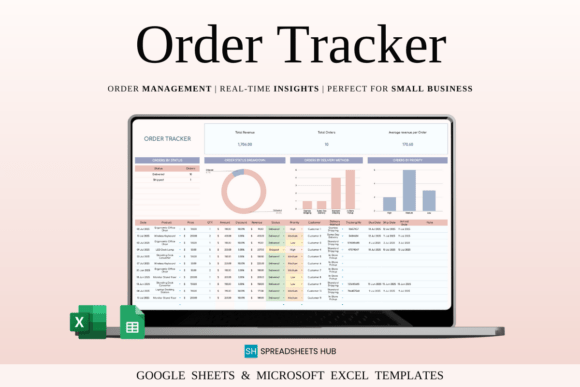
At its core, the Order Tracker Spreadsheet Template is built for function, but its visual presentation is crucial for usability. Think of it like a modern, clean sans serif font in the world of data management—prioritizing clarity and ease of reading above all else. The interface typically uses a neutral color palette, often with white or light gray backgrounds for data entry cells, which minimizes eye strain during long work sessions. This deliberate restraint in color allows for strategic use of smart color coding. Status fields might use a soft green for "Completed," a calm blue for "Shipped," and a warm amber for "Pending," creating an instant visual hierarchy without overwhelming the user. This approach mirrors good editorial design principles, where white space and color accents guide the reader's eye naturally.
The personality of the template is efficient, trustworthy, and organized. It avoids flashy, decorative elements that would distract from its primary purpose. Instead, it offers a structured grid that feels reliable—a premium font for your business data. The style is decidedly contemporary, aligning with modern typography trends that favor minimalism and user-centric design. Its overall appeal lies in its ability to transform complex, chaotic data into a clean, accessible format, much like how a well-chosen typeface can elevate a brand's communication.
Practical Applications Across Your Business
The utility of this Order Tracker Spreadsheet Template extends far beyond simply listing orders. Its design makes it a versatile tool for various operational needs. For a small business owner or online seller, it serves as the backbone of sales operations. You can track orders from placement to delivery, monitor inventory levels indirectly through product lists, and analyze revenue trends with built-in summaries. The instant calculations for totals and discounts eliminate manual math errors, ensuring accuracy in your financial records—similar to how a reliable serif font ensures readability in long-form documents.
For freelancers and content creators, the template can be adapted to manage client projects, track deliverables, and invoice accurately. Imagine using it to monitor the status of design revisions, blog post submissions, or social media campaign assets. The priority level and status color coding become your project management dashboard, highlighting what needs immediate attention. This is practical brand strategy in action—using consistent systems to maintain a professional image and ensure client satisfaction.
Furthermore, the template's structure influences key business aspects:
- Brand Perception & Consistency: Using a systematic tracker projects professionalism and reliability to clients and partners. It ensures consistent communication about order statuses, which builds trust.
- Visual Hierarchy in Data: The color-coded statuses and clean layout create a clear visual hierarchy, allowing you to scan and prioritize tasks efficiently. This reduces cognitive load and speeds up decision-making.
- Audience Engagement: For businesses, timely and accurate order fulfillment directly impacts customer satisfaction and repeat business. A robust tracking system is the first step in that engagement cycle.
Integrating This Asset into Your Toolkit
Choosing to implement an Order Tracker Spreadsheet Template is a strategic decision about your operational design assets. Before diving in, consider how it fits with your existing tools. Does it need to integrate with your accounting software or e-commerce platform? While the template itself is a standalone file, its data can often be exported or referenced elsewhere.
When evaluating the template, test its readability considerations. Are the columns logically ordered? Is there enough space for notes? Does the color coding make sense at a glance? A good template should feel intuitive, much like a well-paired font pairing where each typeface complements the other's function. You might need to customize it slightly—adding columns for specific product attributes or adjusting status labels—to perfectly match your workflow.
Think of this spreadsheet as a core component of your business's brand identity system. Just as you would carefully select a commercial font for your logo and marketing materials, you should choose a management system that aligns with your operational values. A template that offers quick order analysis through filtering and summary views empowers you to make data-driven decisions, spot trends, and identify bottlenecks in your fulfillment process.
Ultimately, the value of an Order Tracker Spreadsheet Template lies in its ability to reduce friction in your daily operations. It’s a practical tool that supports better organization, clearer communication, and more informed business decisions. By adopting a structured system, you free up mental space to focus on growth, creativity, and the core aspects of your work—whether that’s crafting products, designing for clients, or building your brand. It’s a foundational piece that helps everything else run more smoothly.